
In Memoriam: V. Reggie Edgerton, PhD
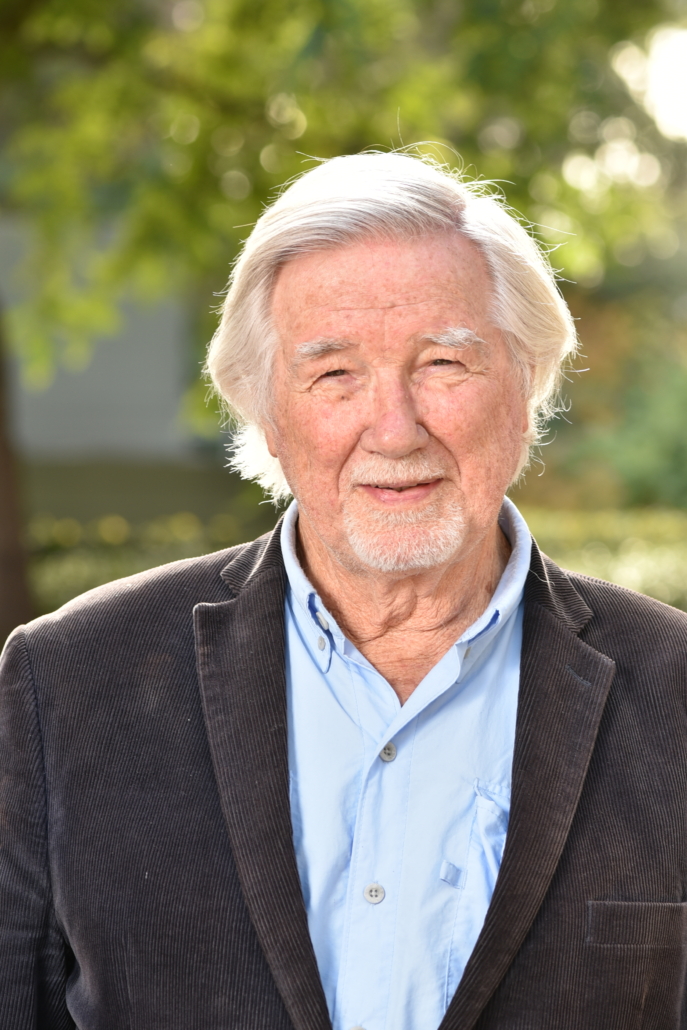
The Department of Integrative Biology and Physiology honors the life and legacy of Professor Emeritus V. Reggie Edgerton, whose extraordinary scientific vision transformed our understanding of muscle, movement, neural plasticity, and recovery after injury. Reggie was a pioneering physiologist, an iconoclastic thinker, a dedicated mentor, and a foundational figure in the history of UCLA’s Department of Kinesiology, later the Department of Physiological Science and, ultimately, today’s Department of Integrative Biology and Physiology.
Born in North Carolina, Reggie’s fascination with the human body began early. After earning degrees in physical education from East Carolina University and the University of Iowa, he completed his PhD in exercise physiology at Michigan State University in 1968. That same year, he joined UCLA as an assistant professor in the Department of Kinesiology, beginning a remarkable academic career that would span more than five decades and influence multiple generations of scientists.
At a time when exercise physiology was still emerging as a rigorous scientific discipline, Reggie helped redefine the field. His early studies fundamentally changed how scientists understand skeletal muscle. Together with colleagues and trainees, he established key principles of muscle fiber specialization, motor unit organization, and activity-dependent adaptation. His work on muscle architecture, force generation, and neuromuscular plasticity provided conceptual frameworks that continue to guide research in muscle biology, biomechanics, rehabilitation medicine, and human performance.
Reggie’s scientific curiosity extended far beyond any single discipline. He was among the first investigators to connect molecular, cellular, physiological, and biomechanical mechanisms across levels of biological organization. His research expanded into space biology, where he became a leading figure in understanding how gravity shapes the neuromuscular system and how prolonged exposure to microgravity alters muscle and neural function. Through collaborations with NASA and international partners, he helped establish foundational principles that continue to influence human spaceflight research.
Perhaps Reggie’s most transformative contributions emerged from his pioneering work on spinal cord injury. At a time when paralysis was widely regarded as permanent, he challenged conventional assumptions and pursued the revolutionary idea that neural circuits within the spinal cord retained an extraordinary capacity to generate motor patterns and respond to training and sensory input. Through decades of work in animal models and human studies, he demonstrated that locomotor function could be improved through activity-dependent training, fundamentally changing scientific understanding of spinal cord plasticity. These discoveries helped lay the groundwork for modern locomotor rehabilitation, robotic-assisted therapies, epidural stimulation, and neuromodulation approaches that continue to improve the lives of individuals living with spinal cord injury around the world.
What distinguished Reggie was not only the scope of his accomplishments, but also his iconoclastic approach to science. He understood that scientific theories must continually be tested and revised, and he was energized by evidence that pointed toward a better path forward. He was fearless in pursuing difficult questions, willing to challenge accepted dogma, and comfortable crossing traditional disciplinary boundaries. Long before interdisciplinary research became a scientific priority, Reggie integrated physiology, neuroscience, biomechanics, engineering, rehabilitation medicine, and space biology. He was motivated not by trends or recognition, but by a genuine desire to understand biological systems and improve human health. His willingness to question prevailing assumptions and pursue ambitious ideas inspired colleagues and trainees alike.
Reggie’s influence extended well beyond his own discoveries. He trained generations of graduate students, postdoctoral fellows, and faculty members who became leaders in muscle biology, rehabilitation science, neuroscience, biomedical engineering, and space physiology. His academic descendants now span institutions around the world. Those who trained with him remember not only his scientific rigor and creativity, but also his encouragement to think boldly, ask difficult questions, and pursue ideas that others might consider impossible.
His impact on UCLA was equally profound. As Chair of UCLA’s Department of Kinesiology from 1985 to 1990, and later as Vice Chair of Physiological Science, Reggie helped guide the department through a period of remarkable growth and scientific transformation. In the mid-1990s, he supported the recruitment of four neuroscience faculty members, recognizing that their addition would strengthen the department’s broader mission in physiology. He championed a vision in which exercise physiology, muscle biology, neuroscience, biomechanics, and rehabilitation science were viewed not as separate disciplines, but as interconnected components of a unified scientific enterprise. The department would later evolve into the Department of Physiological Science and, ultimately, today’s Department of Integrative Biology and Physiology. Many of the strengths that define the department today reflect the intellectual foundation Reggie helped establish through decades of leadership, scholarship, and service.
Beyond UCLA, Reggie served in numerous national and international leadership roles, advised scientific organizations and government agencies, and helped shape research priorities in rehabilitation science, neuroscience, and space biology. His influence reached far beyond his own laboratory, extending into the scientific communities and institutions he helped build.
Yet those who knew Reggie best remember more than his accomplishments. They remember his generosity, his enthusiasm, his distinctive North Carolina roots, and his remarkable ability to bring people together around ideas. He was deeply committed to mentorship, endlessly curious, and genuinely excited by discovery. Whether discussing science, advising a trainee, or debating the future of a field, he brought energy, optimism, and intellectual generosity to every conversation.
Reggie’s scientific legacy is extraordinary. His work transformed multiple fields, influenced thousands of investigators, and improved the lives of individuals affected by injury and disease. But perhaps his greatest legacy lies in the people he trained, the fields he helped build, and the enduring belief that biological systems possess a far greater capacity for adaptation and recovery than we often imagine.
We will miss Reggie profoundly. His ideas, mentorship, and vision remain woven into the fabric of UCLA and the many scientific communities he helped shape. His legacy will continue through the discoveries he inspired, the students he trained, and the countless lives touched by the work he championed.

612 Charles E. Young Drive East
Box 957246
Los Angeles, CA 90095-7246
(t) (310) 825-2590
