|
Dr. V. Reggie Edgerton received his Ph.D. in Exercise Physiology from Michigan State
University, Masters from University of Iowa and BS from East Carolina University. He
has been a Professor at the University of California, Los Angeles, since 1968. Dr.
Edgerton’s laboratory focuses on two main research questions. One question is how do
the neural networks in the lumbar spinal cord of mammals, including humans, regain
control of standing, stepping and voluntary control of fine movements after paralysis, and
how can these motor functions be modified by chronically imposing activity-dependent
interventions after spinal cord injury. Limb motion, electromyographic and kinetics data
are recorded to assess the quality of movements. These studies have shown that the
mammalian spinal cord, without any input from the brain, can learn specific complex
motor tasks such as standing and stepping. We have recently observed that electrodes
placed epidurally over the lumbosacral spinal cord can be used to neuromodulate the
spinal circuitry so that after a complete spinal cord transection, when used in
combination with select pharmacological compounds, the rat is capable of performing
full weightbearing stepping at different speeds and at different levels of load bearing and
can even step in different directions. Thus we now have 3 effective ways to
neuromodulate the spinal cord to improve and regain function: tonic stimulation of the
spinal circuitry using epidural electrodes, pharmacological compounds and repetitive
training of motor tasks. Application of these interventions has made it possible to recover
full weightbearing standing and stepping after complete paralysis in the rat. Even more
recent experimental data have shown that epidural stimulation alone can enable
individuals with complete paralysis for more than 2 years can regain the ability to stand
independently and even regain significant levels of voluntary control of movement of the
legs. Largely using animal models of complete paralysis we are aggressively developing
and testing these interventions in humans, as we are also attempting to determine the
mechanisms for this recovery potential.
In conjunction with these efforts we are also focused on technological developments
that can facilitate the application of the different methods of neuromodulation of the
spinal circuitry. For example, we are developing robotic devices to facilitate assessment
and motor training, complex electrode arrays for better control of spinal stimulation,
a more sophisticated stimulation device to improve fine control and to have this
device under the control of the user and in real-time. In concert with these efforts,
considerable focus is directed toward integrating neural models of locomotion with actual
musculoskeletal properties that are subject specific. Using magnetic resonance imaging
we have developed unique methods to observe detailed movements of muscle fibers and
muscle fascicles in vivo in human subjects voluntarily performing a specific motor task.
Part of our effort also is to determine to what extent, does the nervous system control
the quantity and quality of protein expression in skeletal muscle fibers? What are the
electrical, mechanical and humeral factors that determine the size of muscle fibers and
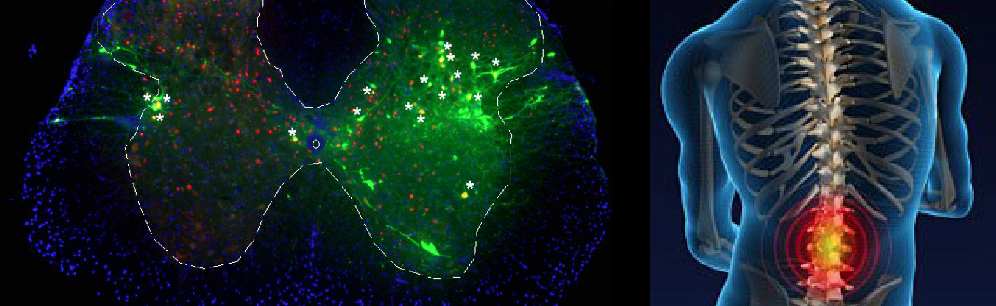
their physiological properties.. Light and confocal microscopy including quantitative
enzyme analyses and immunofluorescence microscopy are some of the experimental
methods used to study motor unit plasticity. The principal animal models used are spinal
cord injury, spaceflight and surgically induced compensatory hypertrophy. These studies
have shown that although the nervous system has a significant influence on the kind and
amount of specific proteins synthesized, there are factors intrinsic to individual fibers
that also define these properties. The results show also that the neural influence that is
associated with muscle fiber types is probably not mediated via the amount or pattern of
activity of the motor units.
We are beginning to find that the interventions being studied for improving function
after spinal cord injury are likely to have beneficial effects also on other neuromotor
disorders such as stroke and Parkinson's. Experiments are being performed to test these
possibilities. Finally, the different methods for neuromodulation of the spinal circuitry
are also being tested with respect to their efficacy in improving function of the arms and
hands.
All of these projects are being performed with national and international collaborators.
Some of the principal universities and institutions are Caltech, University of Louisville,
University of California at San Diego, Irvine, Davis and San Francisco, and the
University of Puerto Rico.
|